

A hand winch is a practical tool for moving, pulling, and positioning loads in warehouses, workshops, construction sites, marine applications, and other industrial environments. Operated manually using a crank handle, it provides mechanical assistance for tasks that would otherwise require considerable physical effort. Choosing the right hand winch in Malaysia requires careful consideration of load capacity, operating conditions, equipment design, and safety requirements.
Before purchasing, businesses should identify their intended application and compare available models based on their specifications. The right equipment can support efficient operations, while an unsuitable winch may create unnecessary risks and maintenance costs.
1. Identify Your Lifting or Pulling Requirements
The first step is to determine how the hand winch will be used. Some models are designed for horizontal pulling, while others are specifically rated for lifting and holding suspended loads. These applications require different equipment and safety features.
Common applications include:
- Moving equipment or materials across a workshop.
- Pulling boats onto trailers.
- Positioning machinery during installation.
- Tensioning suitable cables or straps.
- Lifting loads with equipment specifically rated for lifting.
Identify the load weight, required travel distance, operating frequency, and direction of movement before selecting a model. Never assume that a winch designed for pulling is suitable for lifting suspended loads. Always follow the manufacturer’s stated application and capacity limits.
2. Check the Rated Load Capacity
Load capacity is crucial when choosing a hand winch. Consider the actual pulling force required, including friction, slopes, and uneven surfaces. Capacity may also vary depending on how much cable is wound around the drum.
Before buying, check the following:
- Maximum load: Determine the heaviest load the equipment must handle.
- Rated line pull: Confirm the manufacturer’s stated pulling capacity under the relevant conditions.
- Cable layer capacity: Check whether the rating changes as more cable winds onto the drum.
- Safety margin: Follow the manufacturer’s recommendations and applicable requirements when selecting capacity.
Choosing a winch based only on its advertised maximum rating can lead to problems if that rating does not match the intended application. Consult a qualified equipment supplier if the required capacity is uncertain.
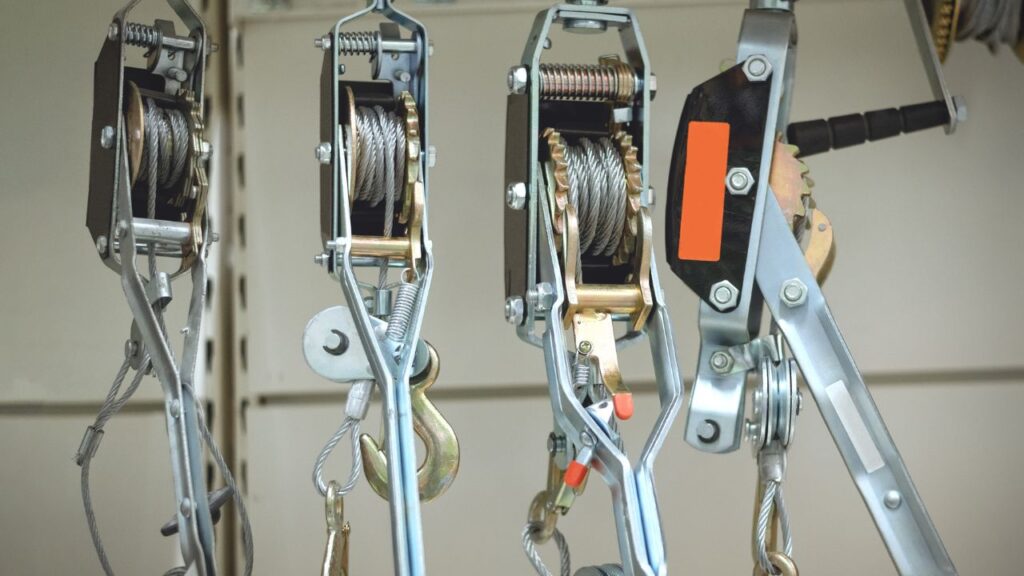
3. Choose the Appropriate Winch Type
Hand winches come in several types to suit different pulling and load-handling tasks. Understanding these differences helps businesses select equipment that matches their operating needs.
Common types include:
- Drum hand winches: Feature a drum that winds cable, rope, or straps to help pull and position objects.
- Brake hand winches: Include a load-holding braking mechanism and may be suitable for lifting when explicitly rated for that purpose.
- Worm gear hand winches: Use a worm gear system to help control load movement, depending on the design.
- Lever-operated cable pullers: Use a ratcheting lever mechanism to pull or position loads without a conventional cable drum.
Each type has different operating characteristics, capacity limits, and installation requirements. Confirm the manufacturer’s specifications before deciding which design is appropriate.
4. Select the Right Cable, Rope, or Strap
The cable or strap used with a hand winch must be compatible with the equipment’s design and rated capacity. The wrong line type or size may affect performance and increase the risk of damage during operation.
When comparing hand winch models, consider:
- Cable or strap material: Choose a suitable option for the intended application and environment.
- Length: Choose a cable long enough for the required distance while keeping the manufacturer’s minimum drum wraps.
- Diameter: Check that the cable or rope matches the winch’s specifications.
- Condition and durability: Consider exposure to moisture, abrasion, and corrosion.
- Attachment points: Verify that hooks, fittings, and connections are compatible with the equipment.
Inspect the cable or strap regularly for fraying, broken wires, kinks, corrosion, or other damage. Replace damaged components according to the manufacturer’s recommendations.
5. Consider Gear Ratio and Operating Effort
The gear ratio affects how much effort is required to operate a hand winch and how quickly the load moves. A higher mechanical advantage can reduce the force needed at the handle, although it may require more turns to move the load the same distance.
Businesses should consider the following features:
- Handle length: A suitable handle design can improve leverage and operating comfort.
- Gear system: Select a mechanism that matches the required pulling force and operating speed.
- Operating frequency: Frequent use may justify a design that reduces operator effort.
- Control: Choose a winch that provides reliable load movement and holding.
Selecting a suitable gear mechanism can make routine tasks more manageable. However, operators should never use an extended handle or apply additional force beyond the manufacturer’s instructions.
6. Evaluate Material Quality and Environmental Conditions
The working environment affects a hand winch’s durability and maintenance needs. When choosing a hand winch in Malaysia, consider humidity, rain, dust, and corrosion risks, especially for outdoor or marine use.
Important factors include:
- Construction materials: Check the durability of the frame, drum, gears, and handle.
- Corrosion resistance: Consider protective coatings or suitable corrosion-resistant materials for damp environments.
- Weather exposure: Confirm whether the model is designed for outdoor use.
- Mounting requirements: Ensure the installation surface and anchor points can withstand the forces involved.
A suitable winch should be selected for the actual working environment rather than appearance or price alone.

7. Prioritize Safety and Proper Installation
Safety is essential when choosing a hand winch. Check the winch, cable, and mounting requirements, and ensure the model suits the intended application. For approved lifting tasks, verify that it has a suitable load-holding brake.
Follow these precautions:
- Never exceed the manufacturer’s rated capacity.
- Confirm that the winch and mounting structure are suitable for the intended load.
- Inspect the cable, hooks, gears, and fasteners before use.
- Keep people clear of the loaded cable and the load’s travel path.
- Never stand beneath a suspended load.
- Follow the operating instructions and applicable workplace safety requirements.
For lifting applications, use only equipment explicitly rated for lifting and holding suspended loads. Seek professional guidance if the installation or application is uncertain.
8. Compare Prices and Choose a Reliable Hand Winch Supplier in Malaysia
Price matters, but the cheapest hand winch may not offer the best long-term value. When comparing a hand winch supplier in Malaysia, consider:
- Product specifications: Check load capacity and suitability for your application.
- Availability: Ensure models and accessories are available.
- Warranty: Review coverage and claim terms.
- Technical support: Check assistance with selection and installation.
- Maintenance: Confirm spare parts and servicing support.
Request a detailed quotation to compare specifications, accessories, warranty, and overall value.
Conclusion
Choosing the right hand winch in Malaysia involves evaluating the intended application, rated capacity, winch type, cable compatibility, gear ratio, operating environment, and safety features. Businesses should confirm whether the equipment is designed for pulling or lifting before making a purchase.
By comparing specifications and working with a reliable supplier, you can select a hand winch that meets your operational needs and supports safe, efficient material handling. Proper installation, regular inspection, and maintenance are equally important for dependable long-term performance.